On page 87, Tatum writes that "Racism, like other forms of oppression, is not only a personal ideology based on racial prejudice but a system involving cultural messages and institutional policies and practices as well as the beliefs and actions of individuals." She then goes on to state that another definition of racism is "prejudice plus power"- that racial prejudice combined with social and political power leads to the making of racist laws, policies, and cultural practices. However, by teaching children and themselves to be critical of racist/sexist messages and cultural norms, people can fight these unjust systems.
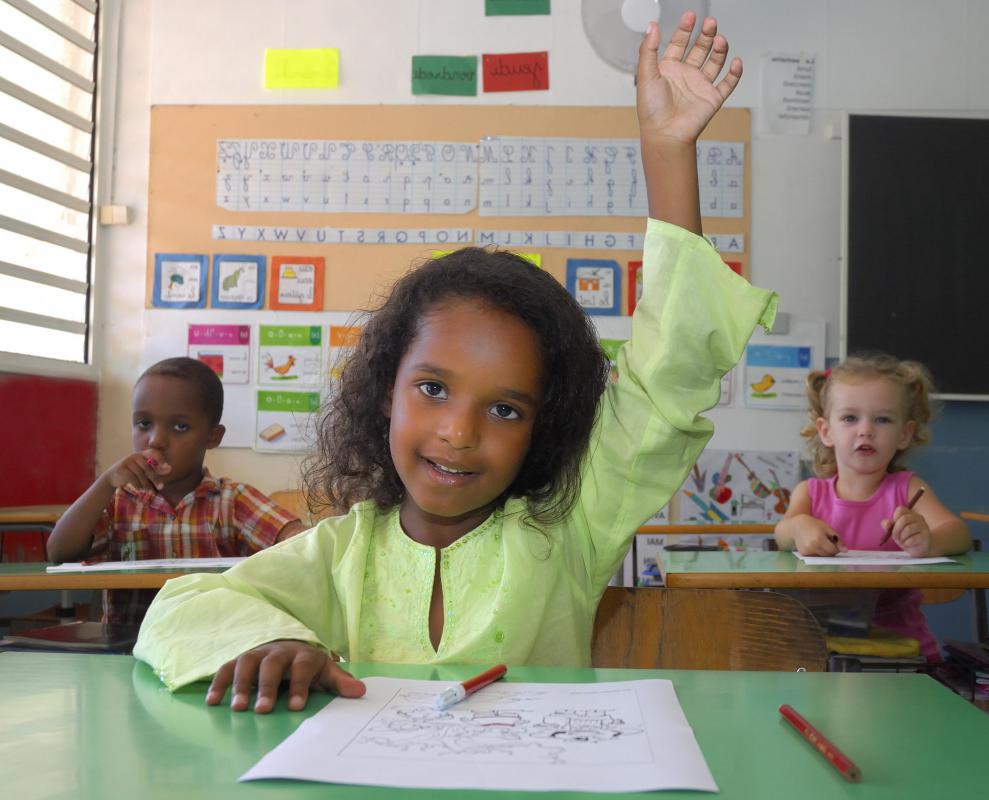
Image credit: https://images.wisegeek.com/little-girl-in-green-raising-her-hand-in-class.jpg
Tatum also tells many stories of how she raised her children to be conscious of racial issues, and proud of who they are by explaining slavery in child-friendly terms when first asked, by having many photographs of family members with varying skin colors around the house and, at a young age, giving them books where the characters were often Black and portrayed positively.
Two examples of Tatum's raising her children to be critical of racism and sexism really stood out to me. The first was on page 126, when she was reading a series of books to her child that she loved when she was younger, and noticed that they were quite sexist, with the girls spending most of their time cooking and cleaning where the boys were having the adventures. She pointed out that the girls were being treated differently just because they were girls to him, and was pleased and surprised by the fact that he began to spot it himself not long after, saying "Hey Mom, there's that stuff again!". The other was on pages 127-128, when she and her oldest son drove by a Black teenager running down a street, and her son suggested that he'd stolen something, she immediately asked why, saw the stereotype that had led him to that conclusion, and pointed out the contradiction: They were in a very low-crime neighborhood, and there were numerous reasons that her son himself might be running down the street, and they then talked about stereotypes in the media and elsewhere, and how they aren't accurate.
I think that raising children to be aware and critical of racism, sexism, and other societal injustices from a young age onward is essential to prevent many of these issues: Teaching them about gender and racial stereotypes, the history of racism in America, consent, privilege, flaws in the justice system, what they can do to help, etc. This is one of, if not the most important and effective ways to curb and even end these prejudices and injustices.
Do you think that many parents are having these kinds of conversations with their children? Do you think it is the role of teacher to have these kind of conversations?
ReplyDeleteI think that many parents talk about these things a little, but most do not explain everything fully, leaving most children to figure out the rest as they get older. As for teachers, I would say definitely is part of their role to have these conversations, as the purpose of teachers and schools is to prepare students for their adulthoods, by giving them essential knowledge and skills applicable to a wide range of areas. This includes teaching about the flaws of the society they live in, and how they can help to fix them. Racism, sexism, and similar issues fall into this category, and it is the responsibility of both parents and teachers/schools to have these important conversations about them.
DeleteI think this post was a very good overview of the benefits of becoming self aware and acknowledging various issues that we may encounter on a daily basis. With that said, what are your thoughts on social media's influence? Do you think that social media improves our awareness of racism and other societal injustices, or does dark humor and video games damage our view of various races and injustices?
ReplyDeleteSocial media has been both helpful and harmful to marginalized groups. It allows people to make others aware of such injustices, and push for justice in cases such as the killings of Ahmaud Arbery, Breonna Taylor, and more. However, it also allows for the spreading of racist and sexist opinions and rhetoric, as well as harmful conspiracies such as Q-Anon and the anti-vax movement that have led to deaths and hate crimes as well as contributing the the Jan. 6 storming of the Capitol. Many of these issues could be helped by more intelligent and ethical decisions made on the parts of companies and regulators, though the larger part of the issue is that many people are not adequately educated on societal issues and critical thinking as children. If they were, they would not be falling for these sorts of conpiracy theories and agreeing with or doing nothing about systemic racism/sexism.
DeleteI found this topic to be very interesting as well. I think that racism is definitely a problem that stems from parents teaching their children racist behaviors. Therefore, if we as a society address the problem by raising the next generation in a similar environment to the authors children, do you think that racism would disappear or do you think that there is an innate need for people to separate others and themselves into groups?
ReplyDeleteThere are definitely instinctive behaviors that contribute to racism, such as the us vs. them mentality, the making of immediate judgements about people and situations, implicit bias, etc. However, these behaviors tend to contribute to systems of racist thinking more than cause them, for example, if a person has seen many incorrect, stereotypical depictions of people of a certain race/gender, such as black men often being depicted as criminal by media, they might have an implicit bias, or take these incorrect and harmful ways of seeing them into account when making these first snap judgements. Children raised in such a manner as to resist these injustices will push back against the influence of racism and sexism in making these instinctive judgements and decisions.
DeleteHi Max, the book you are reading seems interesting so far. You mentioned that you strongly feel teaching children about problems like racism and sexism is important to resolving the issues. I agree that making children aware of these problems would help fight the injustices present in our country. Do you believe that much more work should be done when it comes to educating children? If so, do you think that this responsibility lies on only the parents and teachers, or are these problems something that the community should also be helping to address?
ReplyDeleteThe more children that are taught about the issues and injustices in our society and how to prevent them, the better. The responsibility for having these conversations with them certainly lies on parents and teachers the most, as they are the ones in the best position to teach children about such issues as sexism, systemic racism, flaws in the justice system, consent, etc. directly. But as these injustices affect whole communities, it falls on everyone to help when possible, whether by calling others out for making racist or sexist comments, consciously questioning their biases, or supporting/opposing legislation based that would help/harm marginalized individuals and communities.
Delete